
Headlines
Update: Uncertainty Reigns in Wake of Supreme Court’s Tariff Ruling
President imposes another set of import taxes after judicial decision.

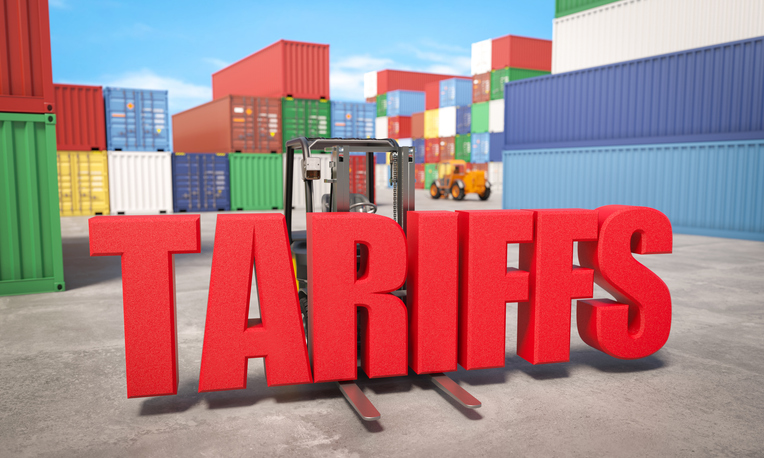 The Trump administration says tariffs will remain part of its economic arsenal, despite a recent U.S. Supreme Court ruling. Photo illustration: tiero/iStock by Getty Images
Within hours of Friday’s U.S. Supreme Court ruling tossing the tariffs the Trump administration had used over the past 10 months under the auspices of the International Emergency Economic Powers Act, the President announced he was invoking a 10% global tariff (upped to 15% the next day) under the auspices of Section 122 of the Trade Act of 1974. That statute that allows presidents to impose duties for up to 150 days “in situations of fundamental international payments problems.”
While that decision is almost certain to draw another spate of lawsuits, representatives of Trump’s administration made it clear that tariffs, in one form or another, are likely to remain a major part of the President’s economic agenda.
Example: In an interview on ABC News’ “This Week” program, top U.S. trade negotiator Jamieson Greer said, “The legal tool to implement [tariffs}, that might change, but the policy hasn’t changed. And so, we’re aiming for continuity. There’s a 15% tariff now. It’s roughly equivalent to the types of tariffs that we had in place under IEEPA.”
He also said that the 15% global tariff Trump announced on Saturday is separate from the bilateral agreements struck in the last nine months with around 20 countries. “We want them to understand these deals are going to be good deals,” Greer said. “We’re going to stand by them. We expect our partners to stand by them.”
Some experts say despite that pledge, the Supreme Court’s ruling will prove to be a step in the right direction. “Over a long horizon, the Supreme Court’s decision is a step toward stability.” wrote Natasha Sarin, a contributing New York TimesOpinion columnist who’s also a professor at Yale Law School and President of that university’s Budget Lab. “We now know that there are limits to the president’s tariff authority. The International Emergency Economic Powers Act does not authorize the executive to change trade policy on a whim in response to commercials presidents don’t like or policies other countries choose that we disfavor. But Mr. Trump will try many other ways to achieve those same unilateral ends. And in the short run, the decision on Feb. 20 will do little to address the uncertainty problem.”





Tapestry Workers Show How They’re Using AI

On Our Radar: Van Cleef & Arpels, Madrid

Back-to-School Shopping: More Parents Using Buy Now, Pay Later

The 2024 Shop! Design Awards Winners

Mission + Pillars

Shop! Ideation 2022 Recap (Photo Gallery)

MasterClass – Beyond the Screen: Specialty Retail Media Networks That Transform the In-Store Experience

MasterClass – Designing for Impact: Transforming Visual Merchandising with Display Innovation and AI

MasterClass – Insights into the Journey Towards the Most Sustainable and Effective Promotions in Retail

Bulletin
Sign up for our bulletins now and never miss out on essential industry news, updates and compelling retail inspiration!
-

 Headlines2 weeks ago
Chili’s Recipe for a Rebound
-

 Headlines2 weeks ago
Vietnamese Beauty Brand Debuts in US
-

 Headlines2 weeks ago
Famed Furniture Chain Under Fire from Activist Investor
-

 Headlines2 weeks ago
Dallas-Area Urban Village Adds High-Profile Retailers
-

 Headlines2 weeks ago
Retailers ‘Well-Stocked’ for Holidays: NRF
-

 Headlines2 weeks ago
Hamilton Jewelers Names Benjamin Siegel Director of Commercial Strategy and Operations
-

 Headlines2 weeks ago
Store Openings by Primark, TheRealReal and Wayfair
-

 Headlines1 week ago
Retail Industry Defends ESLs In Store