
Headlines
Circular Economy Still Spinning Its Wheels
But focused push could change fashion circularity ‘from niche to norm,’ report says

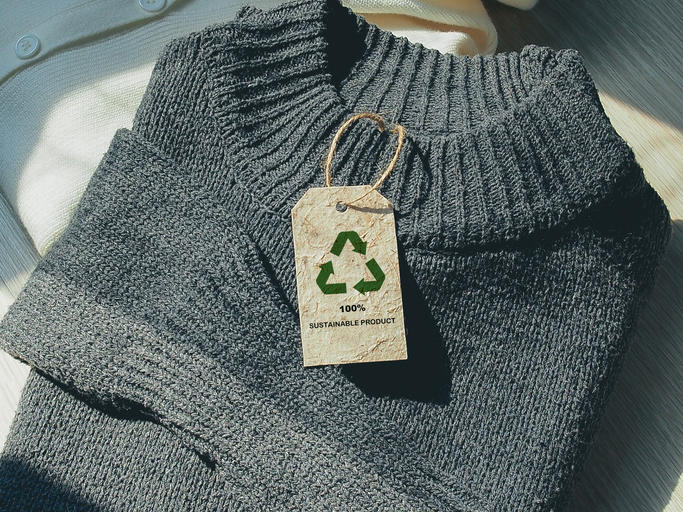
The world continues to produce clothes and other textiles at an unprecedented rate—and discarding them just as fast. A new report from Boston Consulting Group (BCG), titled “Spinning Textile Waste into Value,” estimates the total raw material value of unrecovered textile waste to be about $150 billion a year, and offers strategic suggests for reducing that figure.
“The costs of waste are staggering,” said Catharina Martinez-Pardo, a BCG Managing Director and Partner who coauthored of report. “We’re throwing away billions in value while missing a huge opportunity to make the fashion industry more sustainable and resilient. This is the moment to transform textile circularity from niche to norm.”
The report offers the following stats to back up its assertions: In 2024, global textile waste reached 120 million metric tons, with 80% ending up in landfills or incinerated. By comparison, only 12% of the total was reused, 1% was collected but neither reused nor recycled, and 7% was deemed suitable for recycling. Of that 7%, less than 1% was made into new fiber.
If left unchecked, textile waste could increase to more than 150 million metric tons a year by 2030.
Although recovering the full $150 billion in value mentioned earlier is unlikely, since not all raw material waste can realistically be captured, substantial untapped potential exists. With the right investments to build a large-scale circular textile economy, waste recycling rates could exceed 30%, yielding new fibers with a raw material value of more than $50 billion and creating as many as 180,000 new jobs.
To achieve that —and still build a profitable system for all stakeholders—BCG says the fashion industry should focus on five key actions:
Advertisement- Promote demand for textiles with recycled fibers.
- Collect more waste.
- Modernize sorting.
- Scale effective recycling solutions.
- Invest in innovation.
Realizing that potential will require coordination and commitment from industry players, the public sector and consumers, the report concludes.
Click here to download the full BCG report.


Incomplete or Inaccurate Inventory Info Costly for Retailers

Photo Tour: JanSport Debuts Global Flagship in Seoul

The “Erewhon-ification” of Dining and Other Trends

The 2024 Shop! Design Awards Winners

Mission + Pillars

Shop! Ideation 2022 Recap (Photo Gallery)

MasterClass – Beyond the Screen: Specialty Retail Media Networks That Transform the In-Store Experience

MasterClass – Designing for Impact: Transforming Visual Merchandising with Display Innovation and AI

MasterClass – Insights into the Journey Towards the Most Sustainable and Effective Promotions in Retail

Bulletin
Sign up for our bulletins now and never miss out on essential industry news, updates and compelling retail inspiration!
-

 Headlines2 weeks ago
Holiday Pulse: The Latest Consumer Surveys
-

 Headlines2 weeks ago
Simon to Buy High-Profile Open-Air Center
-

 Headlines1 week ago
Ace, Do-it-Best and REI Make Top 100 Co-Op List
-
 Headlines1 week ago
Canadian Retailers Shift to At-Home Brands
-

 Headlines1 week ago
Bass Pro Shops Expanding Store Footprint in 2027, 2028
-

 Headlines1 week ago
Restaurant Trade Group Spells Out Priorities for New Congress
-

 Headlines7 days ago
AI Agentic Shopping Not Yet Delivering the Goods: Study
-

 Blogs & Perspectives7 days ago
Hybrid Retail/Cultural Space to Debut in Greece