
Headlines
Trump Administration Tries Another Route to Tariffs
Proposal follows government probe into trading partners’ use of forced labor.

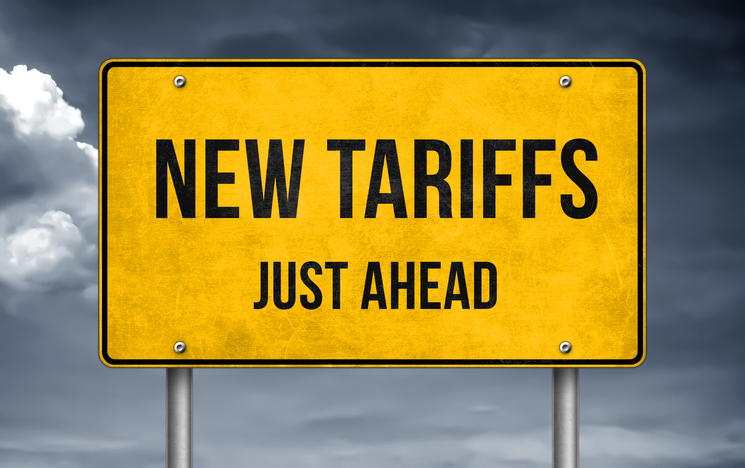 Photo illustration: gguy44/iStock by Getty Images
The Office of the U.S. Trade Representative has proposed a new set of additional tariffs of at least 10% on 60 trading partners after an investigation into their handling and imports of goods allegedly made using forced labor, report a variety of news sources, including Forbes. The proposal is the Trump administration’s latest bid to raise tariff rates after the president’s earlier “reciprocal tariffs” were struck down the Supreme Court.
In a notice issued June 2, the trade representative’s office said its investigation found “acts, policies, and practices” in 60 economies that failed to enforce a prohibition on imports of goods produced using forced labor.
“The failure of these economies to impose and effectively enforce a forced labor import prohibition burdens or restricts U.S. commerce by subjecting U.S. producers to unfair competition from forced labor goods in both export markets and the U.S. market, and by displacing foreign goods produced without forced labor or forced labor inputs from their domestic market to the United States and other markets,” the executive summary within the statement from the trade office said.
Examples of forced labor goods cited in the trade representative’s report include rice imported from Myanmar, cotton from China’s Xinjiang region and tobacco from Malawi, Forbes noted.
The proposal calls for 10% additional duties on such trading partners as the EU, Canada, Mexico, Taiwan, the U.K., Indonesia and others that have implemented a “partial regime” to tackle imports of goods made using forced labor. For all other countries—including China, India, Australia, South Korea, Japan and Brazil—the trade representative proposed an additional tariff of 12.5%.
These new tariffs are not yet in effect, Forbes noted; the trade office said it is taking comments from interested parties prior to a public hearing on the proposed actions takes place on July 7.
AdvertisementIn its coverage of the news, Politico noted that opposition to the latest tariffs was quickly surfacing from the countries named in the report. Example: Bernd Lange, chair of the European Parliament’s trade committee, said that the Trump administration was “desperately searching for new legal grounds to sustain its tariff policy” following its Supreme Court defeat.
“Accusing the EU of not doing enough against forced labor is absurd,” Lange wrote in a post on X. “The EU has adopted the world’s most stringent rules against products made with forced labor. This looks very much like trying to make the facts fit a legal justification for tariffs that has already been decided.”




Trump Administration Tries Another Route to Tariffs

Exhibit Views Marilyn Monroe Through a Different Lens

It’s Over for Clover: Regional Restaurant Chain Closes

The 2024 Shop! Design Awards Winners

Mission + Pillars

Shop! Ideation 2022 Recap (Photo Gallery)

MasterClass – Beyond the Screen: Specialty Retail Media Networks That Transform the In-Store Experience

MasterClass – Designing for Impact: Transforming Visual Merchandising with Display Innovation and AI

MasterClass – Insights into the Journey Towards the Most Sustainable and Effective Promotions in Retail

Bulletin
Sign up for our bulletins now and never miss out on essential industry news, updates and compelling retail inspiration!
-
 Headlines2 weeks ago
On Our Radar: Carolina Herrera, San Diego
-
 Headlines2 weeks ago
LVMH Sells Marc Jacobs Intl. to WHP and G-III
-

 Headlines2 weeks ago
Major Retailers Line Up for Tariff Refunds
-
 Headlines2 weeks ago
The First Casualty of Jewelry Retail? Too Often, It’s Lunch.
-

 Headlines5 days ago
What is a Sustainability Baseline? And Why Do Retailers Care?
-
 Headlines2 weeks ago
Claire’s Merch Headed to Walmart, Kohl’s and CVS
-
 Headlines2 weeks ago
Brands on the Move: Lee and Roberto Cavalli
-

 Shop! Press Releases2 weeks ago
2025 Shop! Design Awards: 183 Winners Announced – Global Brands Including vivo, ZTE, Dreame Lead Consumer Product Design Innovation